
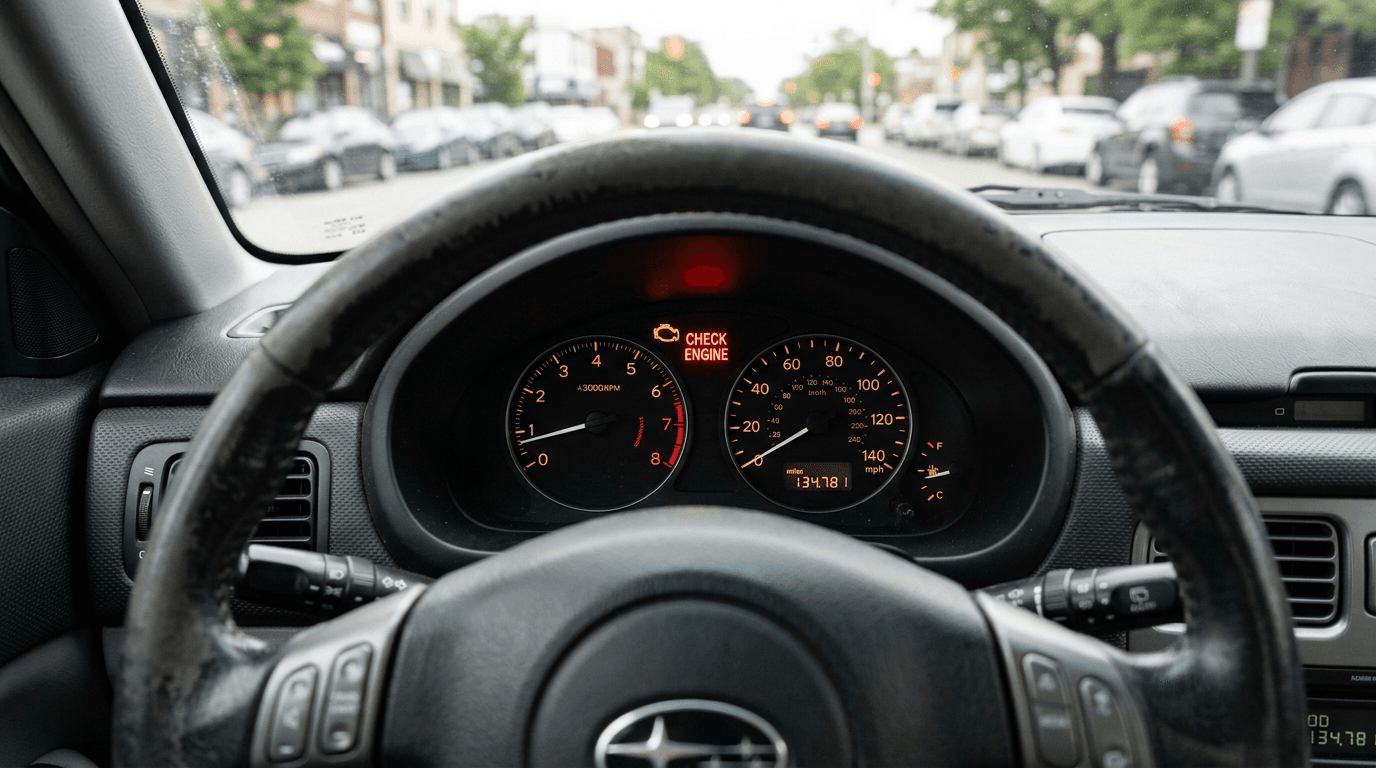
Your car has problems. Maybe the transmission is slipping. Maybe there is an accident on the CarFax. Maybe the check engine light has been on for six months and you are done pretending it is not there.
You want to sell it, but you are not sure what "as is" actually means in California. What do you have to tell the buyer? Can you get sued? And who is even going to buy a car with issues?
I am a licensed dealer in California. I have bought over 50,000 vehicles, and a good number of them had problems. Here is what you need to know.
Quick answer:
- "As is" does NOT remove disclosure obligations in California. You can sell without fixing anything, but you must be honest about what is broken.
- Must disclose: Known mechanical defects, accident history, flood/fire damage, odometer issues, salvage title status
- Best buyer for as-is cars: A licensed dealer who buys in any condition and handles smog, title, and repairs
- Coming October 2026: California CARS Act gives used car buyers a 3-day return right from dealers, making private buyers even more cautious about as-is purchases
What "As Is" Means in California (and What It Does Not Mean)
In a private party sale in California, there is no implied warranty. When you sell your car to another person, the buyer takes the car in whatever condition it is in. That is what "as is" means.
What it does not mean is that you can hide problems. California law is clear: knowingly concealing a defect is fraud. If you know the transmission is failing and you do not tell the buyer, "as is" will not protect you in court.
The rule is simple. You do not have to fix anything. But you do have to be honest about what is broken.
What You Must Disclose
California does not have a single "disclosure form" that covers every defect. But across the title transfer paperwork, smog requirements, and general fraud law, here is what you are legally required to share:
- Known mechanical defects. Engine problems, transmission issues, suspension damage, brake problems, anything you know is wrong.
- Accident history. If the car has been in an accident that you know about, say so. The buyer can check CarFax, but if you know and do not disclose, that is a problem.
- Flood or fire damage. This must be disclosed and is usually noted on the title as a branded title.
- Odometer discrepancies. California requires an odometer disclosure statement on the title transfer (REG 135).
- Salvage or rebuilt title status. This is on the title itself, but make sure the buyer understands what it means.
- Liens. If you owe money on the car, the buyer needs to know. You cannot transfer a clean title until the lien is paid off.
The best protection for both you and the buyer is a written bill of sale that lists every known issue. Keep a copy. If a dispute comes up later, that document is your evidence that you were upfront.
I buy cars from your driveway.
I’m Joe Yavetz, a licensed California dealer. I come to your house, look at the car, write you a check the same day, and handle the DMV paperwork. The number I give you is the number you get. No fine print.
★ 5.0 · 48 Google reviewsSan Fernando Valley, Ventura County & West L.A.
The Smog Check Problem
This is where as-is sales in California get complicated. The seller is required to provide a valid smog certificate for most vehicles. If your car cannot pass smog, you cannot legally complete a private sale in most cases.
Exemptions from smog:
- Diesel vehicles 1997 and older
- Gasoline vehicles 1975 and older
- Electric and hybrid vehicles
- Transfers between certain family members (parent to child, spouse to spouse)
If your car will not pass smog and does not qualify for an exemption, your options narrow. You can pay to fix whatever is causing the failure (which can cost hundreds to thousands depending on the issue), sell to a licensed dealer (dealers have different rules for smog), sell the car for parts, or sell it out of state. The state's repair help, the waiver and the retirement check each have their own eligibility gates; they're compared side by side in my car failed smog: what are my options.
If the car has been parked long enough that the tags lapsed, the smog question answers itself when the buyer is a dealer. See what expired registration actually costs and who owes it.
For more on the smog requirements and other California paperwork, see our complete guide to selling a car in California.
The CARS Act: What Changes in October 2026
Starting October 1, 2026, California's new CARS Act (SB-766) gives buyers of used vehicles under $50,000 a 3-day return right when purchasing from a dealer. This is a major change for the used car market. The full mechanics (restocking fee math, the 400-mile cap, every exclusion) are in our CARS Act 3-day return rule explainer.
For private sellers, the law does not directly apply. You are not a dealer, so the 3-day return right does not cover your sale. But it changes the market in a way that affects you.
Buyers now have a safety net when buying from dealers that they do not have when buying from you. That makes private buyers more cautious, more likely to demand inspections, and more likely to walk away from as-is cars. If your car has known issues, the pool of willing private buyers just got smaller.
Your Options for Selling a Car with Problems
Not every path works for every car. Here is the landscape at a glance, then the detail on each:
| Option | Typical price level | Speed | Best for |
|---|---|---|---|
| Private sale | Highest ceiling, 30-40% off clean value | 2-6 months | Patient sellers, minor issues |
| CarMax / Carvana | Wholesale-level on problem cars | Same day to 3 days | Running cars with modest issues |
| Junkyard / salvage buyer | $1,500-$2,500 on an $8,000 car | Same day | Cars not worth repairing |
| Online problem-car buyers | Above junk, below private | 2-5 days | Major mechanical problems |
| Local dealer who buys as-is | Matches or beats CarMax | Same day, at your home | High mileage, cosmetic damage, many mechanical issues |
Private Sale
You can sell an as-is car privately, but expect a longer process and lower interest. Cars with mechanical issues typically take 2 to 6 months to sell privately. Buyers who are willing to take on a problem car will demand deep discounts, often 30-40% below what a clean version of the same car would sell for.
One Reddit user described the experience: "I have a 2015 with 190k miles and transmission slipping. Dealers offer me $3k, but KBB says $8-10k. Carvana won't buy it. Private buyers see the transmission issue and ghost."
CarMax and Carvana
CarMax will look at most cars, but their offers on vehicles with significant issues tend to reflect wholesale auction pricing. Carvana is more selective. They reject vehicles with branded titles, high mileage above their threshold, and significant mechanical problems.
If your car has a check engine light on, dashboard warnings, or documented mechanical issues, expect either a low offer or a rejection.
Junkyards and Salvage Buyers
If the car is not worth repairing, junk and salvage buyers will take it. Expect wholesale pricing. A car worth $8,000 in good condition might bring $1,500 to $2,500 from a salvage buyer. The upside is speed: many will pick up the car and pay cash the same day.
Online Problem-Car Buyers
Services like Peddle and CarBrain specialize in buying cars with issues. They give online quotes and arrange pickup. Pricing is above junkyard level but below private sale. These work best for cars with major mechanical problems that are not worth the effort of a private sale.
A Local Dealer Who Buys As-Is
Some licensed dealers buy cars regardless of condition. I buy most vehicles, though not every one. Cars with significant frame damage or certain situations I cannot help with, I will tell you directly and point you to someone who can. For most as-is vehicles, including high mileage, cosmetic damage, and many mechanical issues, I can make a firm offer at your home in about 20 minutes.
I use professional valuation tools backed by real auction and market data. I guarantee to match or beat any CarMax offer on vehicles I buy. I also handle the lien payoff if you still owe money on the car.
How to Get the Best Price for an As-Is Car
A few things that actually make a difference:
Get your maintenance records together. A car with 190,000 miles and full service records is worth more than one with 190,000 miles and no history. The records tell a buyer that someone cared about this car.
Be specific about the problems. "Needs work" scares buyers away. "Transmission shifts hard between 2nd and 3rd, quoted $2,800 for rebuild" gives them a number to work with. Specificity builds trust and attracts buyers who know what they are getting into.
Price realistically. KBB "Fair Condition" is not your car if your car has a mechanical problem. Look at what similar cars with similar issues are actually selling for on Facebook Marketplace and Craigslist in your area.
Consider the time cost. If your car is going to sit for 3 months on Marketplace, it is depreciating, costing you insurance, and still in your driveway. Sometimes taking a lower offer today beats chasing a higher number for months. Cars with problems take even longer than clean cars to sell privately. For the real timelines, see how long it actually takes to sell a car.
If you want help creating a listing that accurately represents your car, our free listing generator creates professional listings for 5 platforms in about 30 seconds. It also gives you a range of what a firm offer from a dealer would look like.
Title Issues and As-Is Cars
As-is cars sometimes come with title complications. Salvage titles, branded titles, cars with liens, inherited vehicles where the title was never transferred. Each one adds a layer of complexity to the sale. If yours carries a salvage or rebuilt brand, that's its own world with its own buyers: see selling a salvage or rebuilt title car in California. And if an accident was serious enough that an insurer may call the car a total loss, check the numbers before you accept any payout or offer with our guide on when a car is actually considered totaled in California.
If your car has a title issue on top of mechanical problems, private sale becomes very difficult. Most private buyers will not touch a car with both a mechanical issue and a title complication.
For the title side specifically, see our guides on selling a car without a title in California and selling a car privately.
Frequently Asked Questions
Can you sell a car as is in California?
Yes. Private sellers in California can sell a car as is. There is no implied warranty in private party sales. However, you must still disclose known defects. Hiding a known problem is fraud regardless of any "as is" language in the sale agreement.
What do you have to disclose when selling a car in California?
Known mechanical defects, accident history, flood or fire damage, odometer discrepancies, salvage or branded title status, and any active liens on the vehicle.
Do I need a smog check to sell a car as is in California?
Yes, with exceptions for diesel vehicles 1997 and older, gasoline vehicles 1975 and older, electric and hybrid vehicles, and certain family transfers. If your car cannot pass smog, you may need to repair it, sell to a dealer, or sell for parts.
What does the California CARS Act mean for as-is sales?
Starting October 1, 2026, the CARS Act gives buyers a 3-day return right on used vehicles under $50,000 purchased from dealers. This does not apply to private sales, but it makes private buyers more cautious about as-is purchases since dealer purchases now come with built-in protection.
Where can I sell a car with mechanical problems?
Private sale (longest timeline), junkyards or salvage buyers (fastest but lowest price), online problem-car buyers like Peddle or CarBrain, or a local licensed dealer who buys as-is vehicles. CarMax and Carvana typically reject cars with significant mechanical issues. For the specific math on transmission failures (when a $700 fix beats a $4,000 sale, when it does not), see sell a car with a bad transmission.
Can I sell a car that will not pass smog in California?
Not easily in a private sale. California requires the seller to provide a valid smog certificate. Options include repairing the smog issue, selling to a licensed dealer, selling for parts, or selling out of state.
En español: Vender Carro con Problemas en California.